Soulkin
UX/UI Design of a strategic, monster collector, roguelite game.

⏱️
Time
11 Month
👤
My role
UX/UI Designer
🛠️
Tools
Adobe Xd, Photoshop, After Effects, Unity
🟢
status
Live
This project is a PC tactical roguelite monster collector built around deep, interconnected combat systems.
I worked as the sole UX Designer, also contributing to UI definition and final asset implementation.
The core focus of my work was managing combat complexity through interface design, with particular attention to the Battle HUD as the main tool supporting player decision-making.
The project underwent a significant shift early in development, moving from a mobile concept titled Soul of Ankiril to the current PC experience. Rather than a direct adaptation, the transition required a reassessment of scope, systems, and UX needs. Core strategic ideas were preserved, while the game was redesigned around longer play sessions, a PvE-focused structure, and greater systemic depth suited to PC.
Soulkin is designed for indie players who enjoy turn-based tactical combat, strategic decision-making, creature collection, with a strong focus on replayability and mastery within a roguelite structure.

The Battle HUD served as the primary entry point for the UX work and required the most iteration.
Early explorations considered retaining card-based interactions, later discarded in favor of a layout better suited to tactical combat.
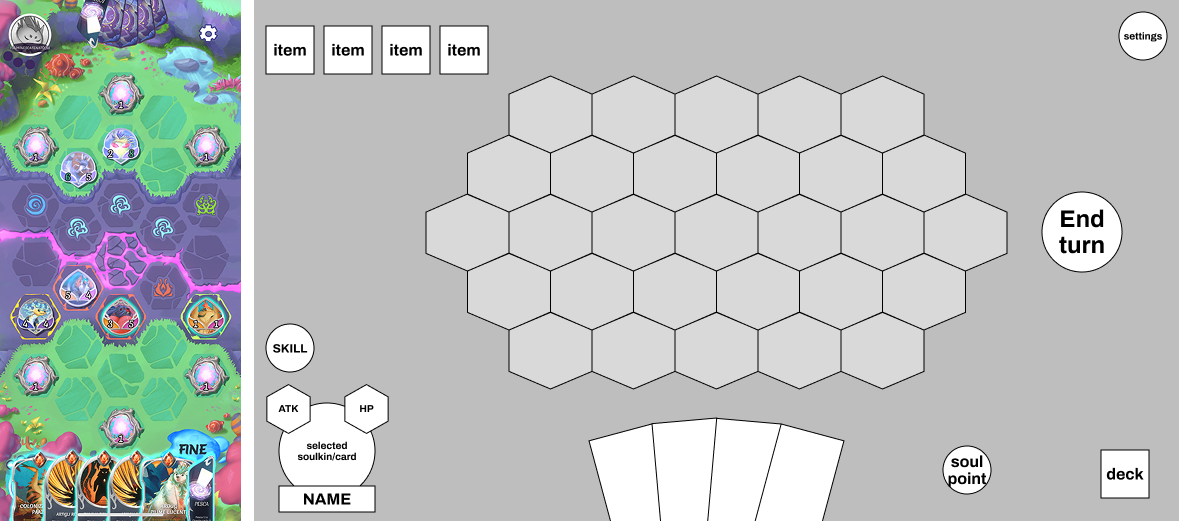
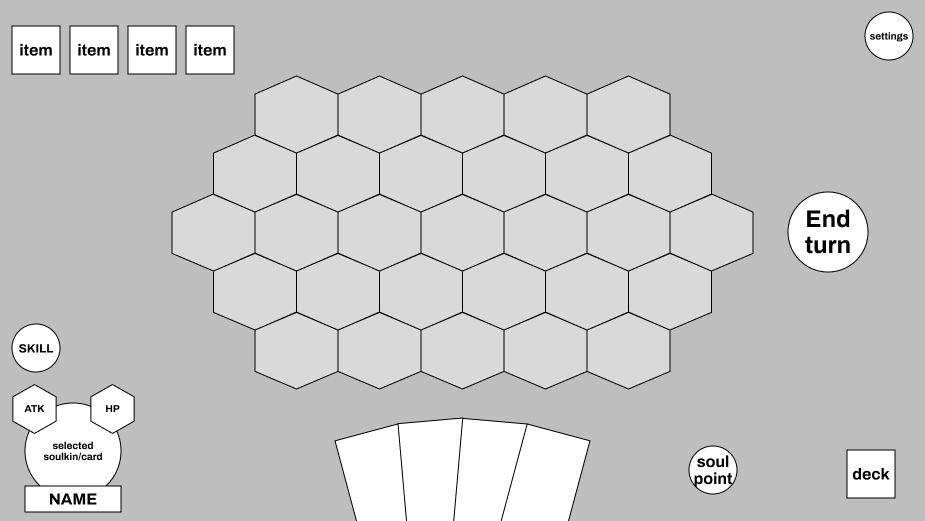
Early wireframes explored a horizontal combat layout while retaining cards, allowing us to validate information grouping, spatial priorities, and how much decision-making could realistically happen around a card-driven model in a positional context.
As combat mechanics evolved, the game design moved away from cards in favor of a summonable team of soulkin. In response, the interface was restructured to surface the team as an always-visible element, while redistributing abilities, items, and turn controls to reduce vertical congestion and improve readability during combat.
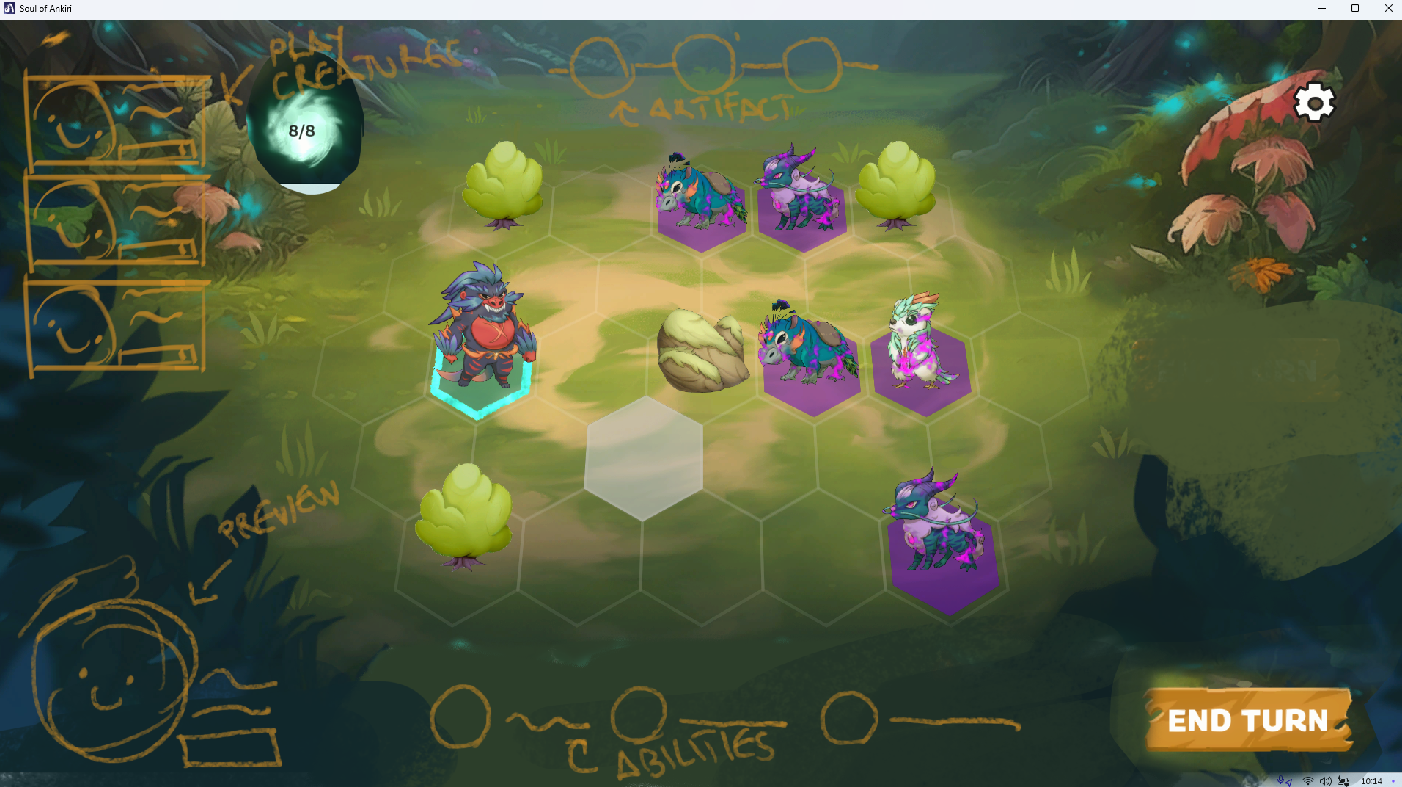
At this stage, UX decisions focused on hierarchy and affordances: distinguishing allies from enemies through color, clearly indicating selection states, and ensuring that critical information remained visible without competing with the battlefield.
Due to production constraints, later iterations were tested directly in-engine using Unity, in close collaboration with developers. This allowed UX decisions to be validated under real gameplay conditions, particularly around action feedback, ability usage, and the growing number of on-screen elements.
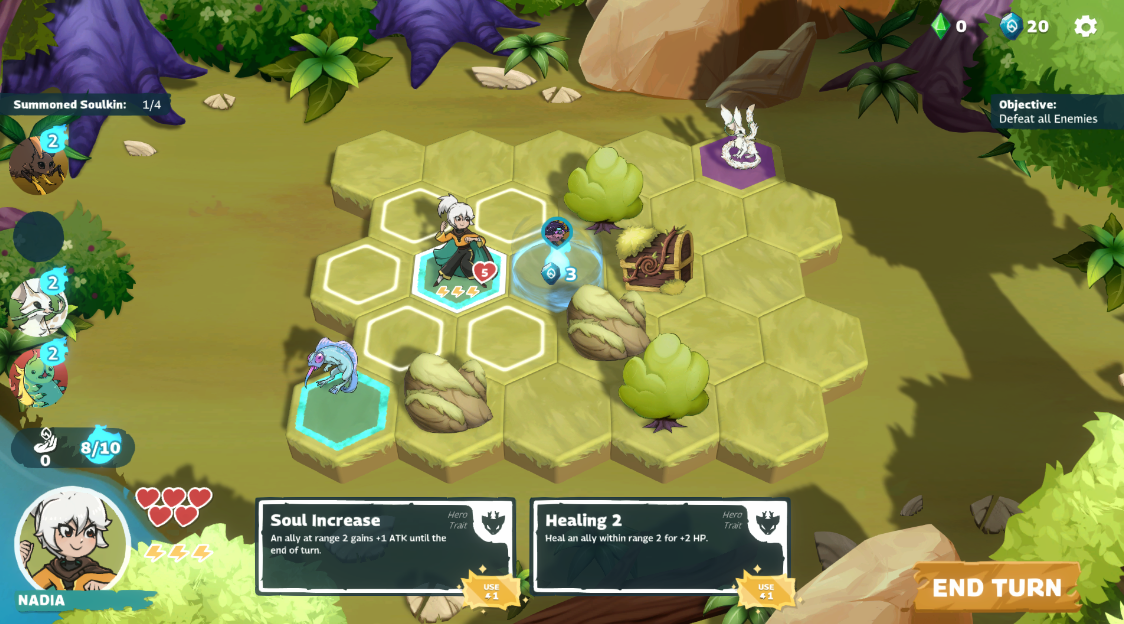
Following player feedback from the demo, several mechanics and interface elements were refined or simplified. The focus shifted from accommodating new systems to improving clarity, consistency, and decision confidence during combat. Additional work was done on element readability and micro-interactions, refining visual states, feedback timing, and interaction responses to make the HUD feel more reliable and easier to parse during critical moments.
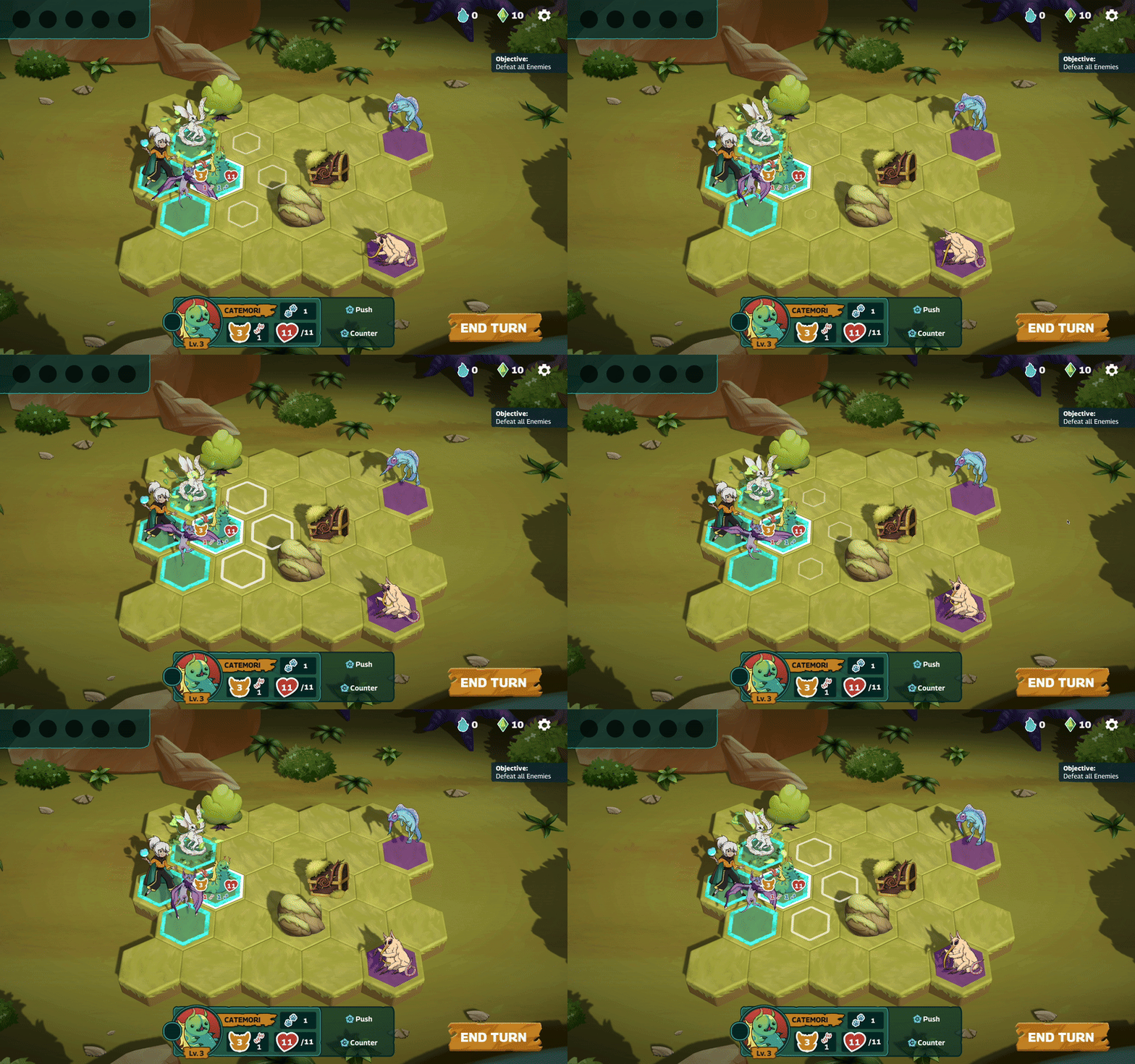
What is shown here represents only part of the overall project, focusing on the Battle HUD as the most substantial and representative UX challenge. While the work extended across multiple areas of the game, this section best illustrates the complexity and iteration involved throughout development.
This project marked the conclusion of my first full PC game experience, following my initial work on Soul of Ankiril.
It was a valuable learning process that shaped my approach to game UX, particularly in translating complex systems into usable interfaces under real production constraints. Despite its imperfections, the project remains a point of pride, as it was completed and released.
Overall, the work achieved a solid balance between depth and usability. With more time, I would have further explored micro-interactions and interaction feedback, as well as controller support ideally extending the experience to platforms like Nintendo Switch.